
Index: Baby’s Breath
Table of contents
- Plant Overview : Babys Breath
- Quick Facts
- Native Climate & Indoor Placement
- Care & Seasonal Maintenance
- Step-by-Step Repotting Guide
- Step-by-Step Propagation Guide
- Identification & Treatment of Common Pests
- Recommended Tools & Gear
- Frequently Asked Questions: Baby’s Breath
- Citations and References: Baby’s Breath

Plant Overview: Babys Breath
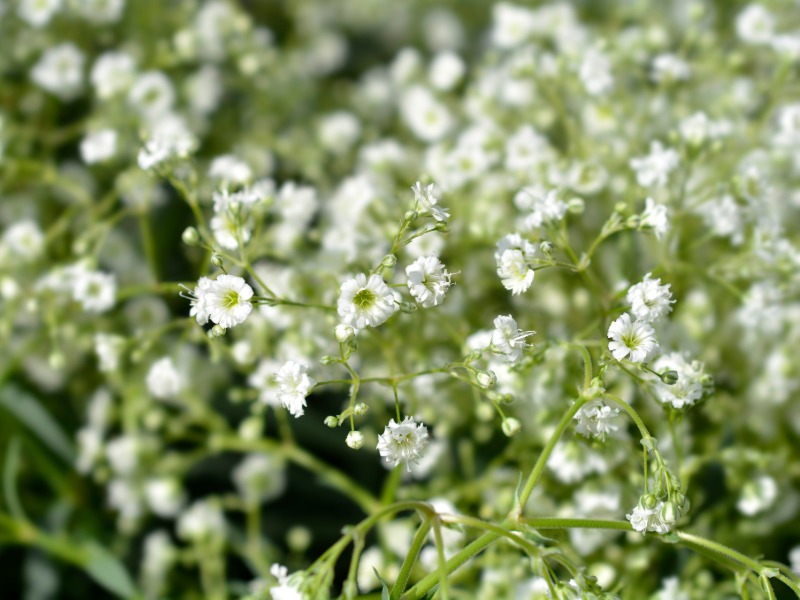
The Baby’s Breath presents an expansive, domed structural silhouette characterized by slender branching stems covered in dense clusters of miniature white or pink flowers. Narrow, grayish-green foliage lines these flexible stems, contributing a delicate, airy aesthetic ideal for garden borders and cut flower compositions. This specimen accommodates both novice and veteran horticulturists alike thanks to its impressive hardiness against dry earth conditions and high summer temperatures once established. Its rugged constitution and cloud-like visual impact guarantee lasting popularity across landscape designs.

Historically valued in floral design as a versatile background accent that highlights bolder foreground blossoms, this species integrates seamlessly into rustic cottage layouts and contemporary landscape frameworks alike. Tradition highlights its effectiveness as a prominent mid-border element or a soft textural pathway highlight. It blends effortlessly into casual, formal, and minimalist garden environments. Furthermore, its dependable flowering schedule secures ongoing visual charm throughout the peak summer months.
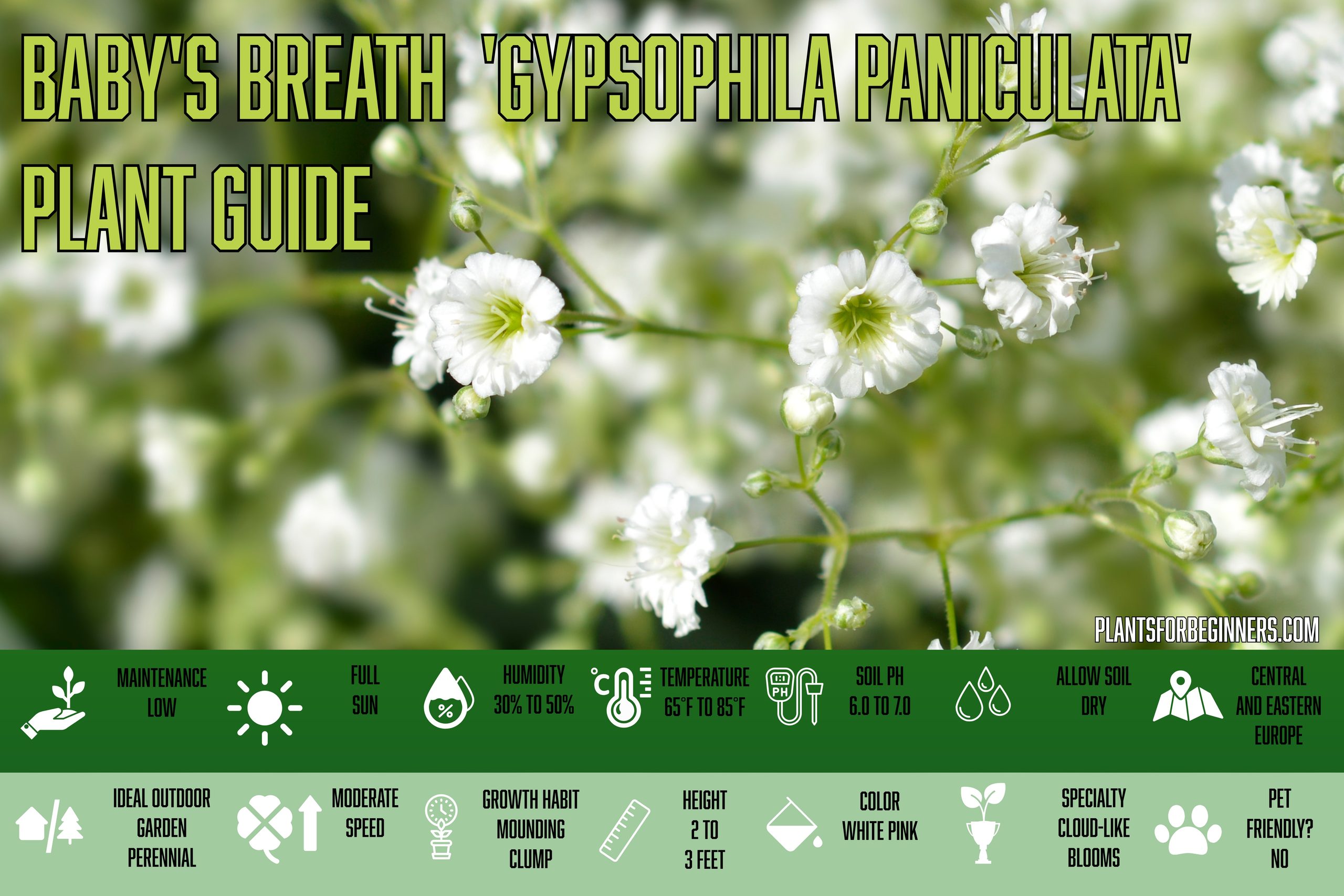
Quick Facts
| Plant Metric | Profile Data |
| Binomial Plant Name | Gypsophila paniculata (Baby’s Breath) |
| Type/ Category | Herbaceous Perennial |
| Genus | Gypsophila |
| Maintenance Level | Low Maintenance |
| Pronunciation | jip-SOF-uh-luh pan-ik-yoo-LAY-tuh |
| Meaning Behind Name | Derived from Greek words meaning gypsum-loving, referencing the chalky soils where native species thrive. |
| Nicknames | Baby’s Breath, Annual Gypsophila |
| Commonly Confused With | Galium odoratum (Sweet Woodruff), which features similar delicate white star-shaped clusters but prefers heavy shade and moist soils. |
| Variants of Plant | Gypsophila paniculata ‘Bristol Fairy’, Gypsophila paniculata ‘Pink Star’, Gypsophila paniculata ‘Rosy Veil’ |
| Plant Companions | Lavender, Coneflower, Salvia |
| Hybrid | Yes, modern horticultural varieties feature double-flowered forms bred for increased petal density and enhanced garden longevity. |
| Temperature | 65°F to 85°F (18°C to 29°C) |
| Light | Full sun, direct daily illumination |
| Watering | Allow the root zone to dry completely between thorough irrigation sessions. |
| Humidity | 30% to 50% |
| Soil pH | 6.0 to 7.0 |
| Hardiness level Growing Zone | USDA Zones 3 to 9 |
| Blooming Season | Summer to late summer, producing profuse branching clouds of tiny white or pink blossoms. |
| Lifespan | 5 to 10 years or greater under optimal well-drained garden conditions |
| Growth Speed | Moderate, adding rapid bush volume and several branching tiers each spring. |
| Edible | No, plant tissues lack culinary utility and contain minor saponins. |
| Pet Friendly | No (Harmful to domestic animals, causing mild gastrointestinal upset upon ingestion). |
| Regions of World Found | Central and Eastern Europe, Siberia, and parts of Central Asia |
Native Climate & Indoor Placement
Originating from open steppes and rocky, lime-rich grasslands across Eurasia, this flora evolved under unfiltered sunlight where root saturation is practically nonexistent. This natural setting conditioned the species to optimize solar exposure and deep taproot moisture retrieval, dictating precise outdoor positioning rules to protect sensitive root crowns. Replicating these foundational parameters outdoors prevents basal rot and fungal foliage issues.

Window Orientation: Not suitable for permanent indoor houseplant culture; requires full open-air sunlight.
Deep Room Placement: Incompatible with indoor deep room settings due to high light and airflow requirements.
Temperature Ranges: Optimal seasonal development occurs within a steady thermal bracket of 65°F to 85°F (18°C to 29°C).
Winter Minimums: Survives freezing winter ground temperatures down to USDA Zone 3 while dormant underground.
Draft Warnings: Protect young growth from severe wind tunnels, though good air circulation around mature stems is beneficial.
Care & Seasonal Maintenance
Understanding the intrinsic rhythms of the species prevents common cultivation mistakes. Rigid calendar irrigation timetables frequently backfire because local weather fluctuations and precipitation alter soil moisture evaporation speeds. The deep taproot network reserves hydration efficiently, signaling hydration requirements through stable structural firmness.
Water, Temperature, Humidity, and Soil
Deep, saturating watering cycles mimic heavy rainstorms and serve as the cornerstone of correct irrigation habits. This practice compels plants to cultivate deep, sturdy taproot systems rather than dependent, shallow surface roots. Permitting earth to dry thoroughly between sessions prevents crown rot and preserves adequate oxygen levels around subterranean tissues.
- Water: Deliver deep, infrequent drenching only when the top 2 to 3 inches of the root zone have completely dried out, avoiding constant shallow moisture that invites crown rot.
- Temperature: Maintain active growth environments between 55°F and 85°F (13°C and 29°C) while ensuring full hardiness down to USDA Zone 3 during winter dormancy.
- Humidity: Keep ambient relative humidity low to moderate, ensuring adequate cross-ventilation to prevent powdery mildew on dense floral heads.
- Soil: Cultivate in a well-draining, neutral-to-alkaline substrate with a pH range of 6.8 to 7.8, enriched with coarse sand and crushed limestone to mimic native rocky steppes.

Lighting Thresholds for Baby’s Breath
Foliage and stem appearance functions as an immediate health barometer under prevailing environmental conditions. A thriving specimen exhibits robust branching stalks and prolific blossoming under direct, uninterrupted sunlight. Insufficient illumination produces weak, spindly growth alongside sparse, reduced flower yields.
Seasonal Adjustments for Baby’s Breath
- Spring and Summer (Active Growth): Provide deep watering only when the surrounding soil is completely dry, and apply a balanced, low-nitrogen fertilizer once in early spring.
- Autumn and Winter (Dormancy): Adjust care routines as foliage dies back, cut stems down to ground level after the first frost, and suspend all feeding.
Step-by-Step Repotting Guide
Root expansion happens via a deep taproot network, meaning container growth is challenging and permanent garden planting is strongly preferred. Avoid unnecessary transplant disturbances, as mature specimens resent having their deep taproots moved once established. Allowing plants to remain undisturbed in well-drained garden beds promotes stability and maximum blossom output.
Gritty Soil Mix Matrix for Baby’s Breath
Standard heavy garden soil retains excess moisture and suffocates taproots, requiring a specialized porous blend instead:
- Ratio Part 1: Coarse sand or decomposed granite, functioning as the primary structural drainage base.
- Ratio Part 2: Perlite or pumice, offering crucial subterranean aeration capabilities.
- Ratio Part 3: Garden loam enriched with agricultural lime, supplying calcium and a neutral-to-alkaline pH balance.

How to Repot Your Baby’s Breath
Early spring provides the optimal window to execute any necessary garden repositioning to capitalize on active seasonal recovery periods.
- Container Sizing: If starting in nursery containers, choose a deep pot to accommodate the taproot, and carefully ease the root ball from its vessel.
- Root Manipulation: Examine the root system, gently freeing any circling roots without damaging the primary taproot.
- Root Pruning: Check for compromised or decaying tissue, trimming affected segments with sterilized shears.
- Base Layering: Add gritty substrate to the base of the planting hole, center the specimen, and fill perimeter gaps without packing the soil too tightly.
- Post-Repot Care: Water lightly to settle the soil, position the plant in full sun, and withhold fertilizer until active new growth appears.
Step-by-Step Propagation Guide
Multiplying this vegetation relies on leveraging seed production or basal stem cuttings rather than leaf pulls. Specialized root and crown structures supply the necessary tissue points for generating new independent systems. Attempting propagation using single leaves will prove unsuccessful due to a lack of regenerative meristematic nodes.
Method 1: Stem Cuttings (Fastest Results)
Utilizing soft-stem cuttings yields dependable results and rapid expansion for garden bed coverage.
- Sourcing the Cut: Select healthy non-flowering shoots in spring containing active growing tips.
- Callusing: Allow the severed end to dry in the air for several hours to seal the tissue against moisture rot.
- Container Sizing: Prepare a propagation flat filled with a loose, sandy rooting aggregate.
- Embedding: Push the cutting deep enough to secure the base, apply minimal initial moisture, and place it in a warm, bright micro-climate.
- Tracking Growth: Test for root resistance after a few weeks to confirm successful anchoring before outdoor transfer.

Method 2: Rhizome Division (The Patient Approach)
Sowing seeds offers a reliable multiplication strategy for establishing large drifts of plants.
- Isolating Tissue: Harvest mature seed capsules from spent flower heads when dry and brown.
- Preparation: Clean seeds and store them in a cool, dry envelope until spring sowing time.
- Substrate Positioning: Sow seeds shallowly across a well-drained seed-starting mix, pressing them lightly into the surface without deep burial.
- Incubation Parameters: Keep ambient temperatures moderate, lighting bright and indirect, and surface moisture lightly misted.
- Transition Sequences: Monitor for true leaf emergence before hardening off seedlings for direct garden placement.
Identification & Treatment of Common Pests
Physical characteristics shift perceptibly when environmental pressure factors develop. Identifying early warning signals such as color fading or stem drooping helps shield plant structures from severe decline. Routine checks stop minor pest challenges from turning into major infestations.
Baby’s Breath: Visual Symptom Table
| What You See | The Underlying Issue | The Instant Fix |
| Wilting stems | Overwatering or root rot | Improve soil drainage and withhold water |
| Powdery white coating | Fungal powdery mildew infection | Apply organic fungicide and improve air flow |
| Yellowing foliage | Nutrient lockout or poor light | Check soil pH and ensure full sun exposure |
| Stunted growth | Compacted or acidic soil | Amend soil with lime and loosen surrounding earth |
| Chewed leaf margins | Caterpillar or beetle activity | Handpick pests and apply targeted insecticidal soap |

Identification & Treatment of Key Pests
Regular garden maintenance habits secure prompt insect mitigation, while gentle organic remedies safeguard fragile plant exteriors against harsh chemical stress.
Aphids: Tiny soft-bodied bugs gathering on tender branch tips, extracting sap and leaving behind sticky honeydew residue.
- The Fix: Spray colonies off with a sharp stream of water and apply insecticidal soap if needed.
Spider Mites: Microscopic arachnids thriving in hot, dry environments, consuming cellular fluids and causing stippled leaf patterns.
- The Fix: Increase ambient moisture rinsing and apply horticultural oil to affected stems.
Crown Rot Fungi: Pathogens attacking root crowns in poorly drained soils, causing sudden collapse of stems.
- The Fix: Remove infected plants immediately and amend surrounding soil with coarse drainage aggregate.
Recommended Tools & Gear
Ordinary household instruments or dense generic soils can damage delicate plant parts. Employing dedicated accessories guarantees smooth trimming cuts and healthy long-term recovery.
- Bypass Pruning Shears: Precision steel blades designed for clean cuts without crushing surrounding stem tissues.
- Agricultural Lime Amendment: A specialized mineral additive designed to maintain neutral-to-alkaline soil pH levels.
- Garden Soil Drainage Trowel: A sturdy stainless steel digging tool designed for amending rocky or sandy garden beds.
- Long-Reach Soil Moisture Meter: A diagnostic probe that assesses moisture levels deep within the root zone

Frequently Asked Questions: Baby’s Breath
FAQ
Stalled development usually stems from heavy soil or insufficient sunlight. These species require full sun exposure and alkaline, fast-draining earth to prevent root stagnation and maintain active seasonal growth.
Outdoor placement is required for this full-sun perennial. Position the plant in an open garden bed with maximum daily sun exposure, ensuring it is never relegated to dark indoor environments.
Natural rainfall and outdoor airflow keep foliage clean. Avoid artificial polishing agents, allowing the natural waxy leaf coating to breathe freely under open skies.
No, this species can cause mild irritation to pets. Per veterinary toxicological guidelines, ingestion can introduce compounds that lead to minor digestive discomfort in domestic animals.
Citations and References: Baby’s Breath
- Royal Botanic Gardens Kew Plants of the World Online: Complete taxonomic tracking, geographical documentation, and distribution updates are officially verified by the Royal Botanic Gardens Kew Plants of the World Online Database.
- University of Florida Extension: Temperature parameters, environmental thresholds, and growth adjustment guidelines are certified by the University of Florida Extension foliage plant guides.
- Missouri Botanical Garden: Indoor pest management sequences, lifecycle tracking, and diagnostic workflows are supported by the Missouri Botanical Garden plant care documentation.
- ASPCA Animal Poison Control Center: Animal safety classifications and toxicology logs validating pet consumption risk levels are certified via the ASPCA Toxic and Non-Toxic Plants Database.
Leave a Reply